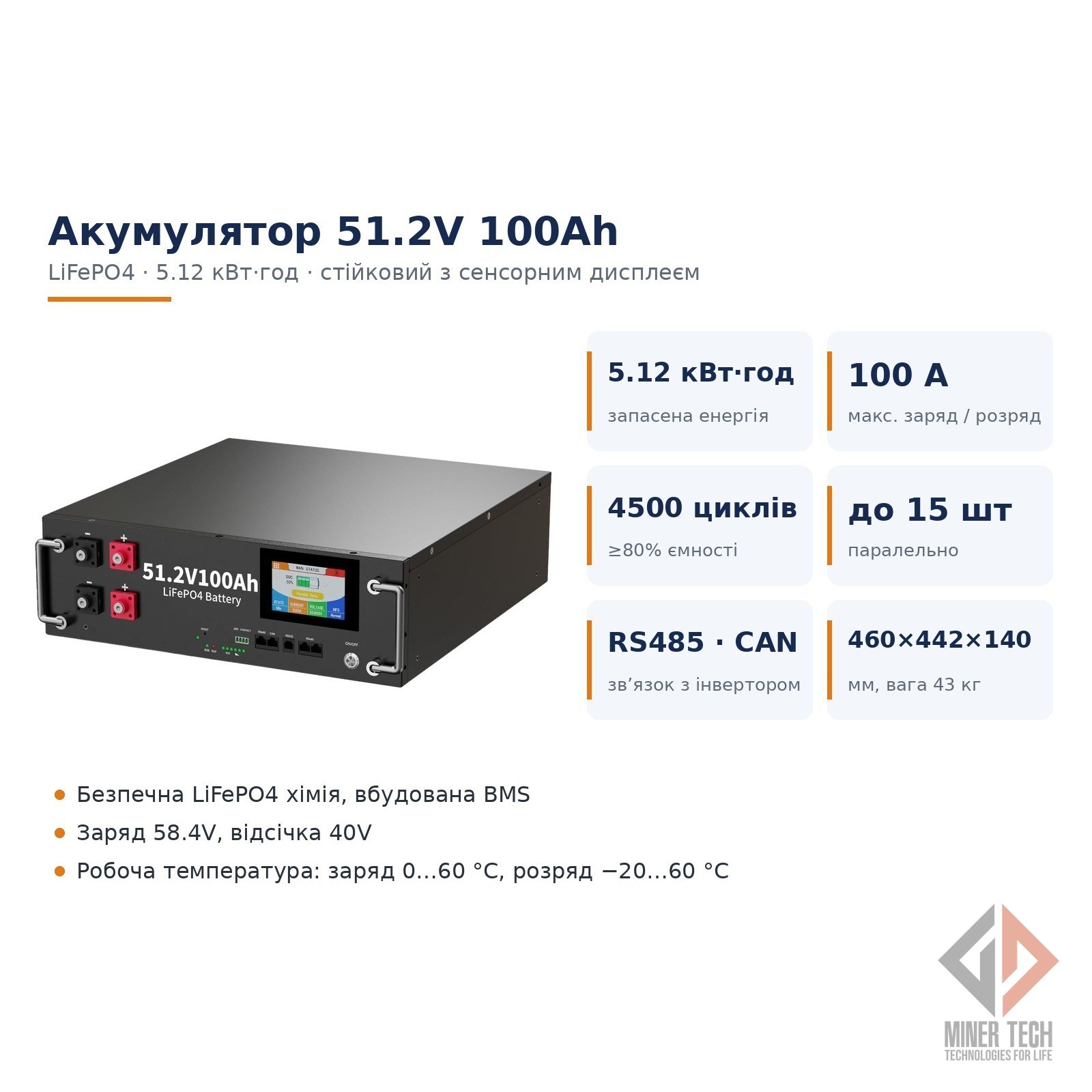
Description
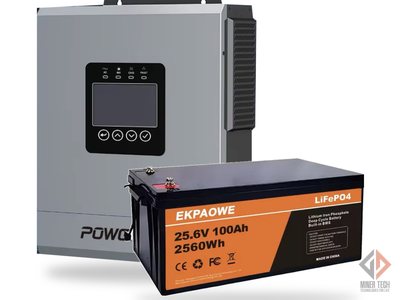
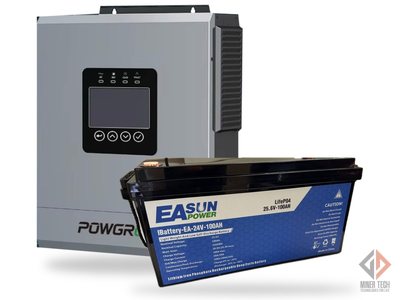
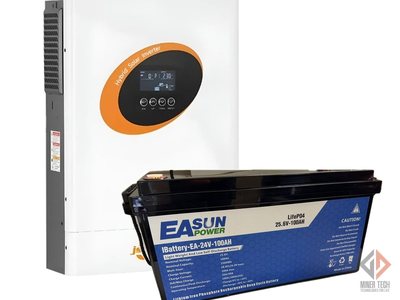
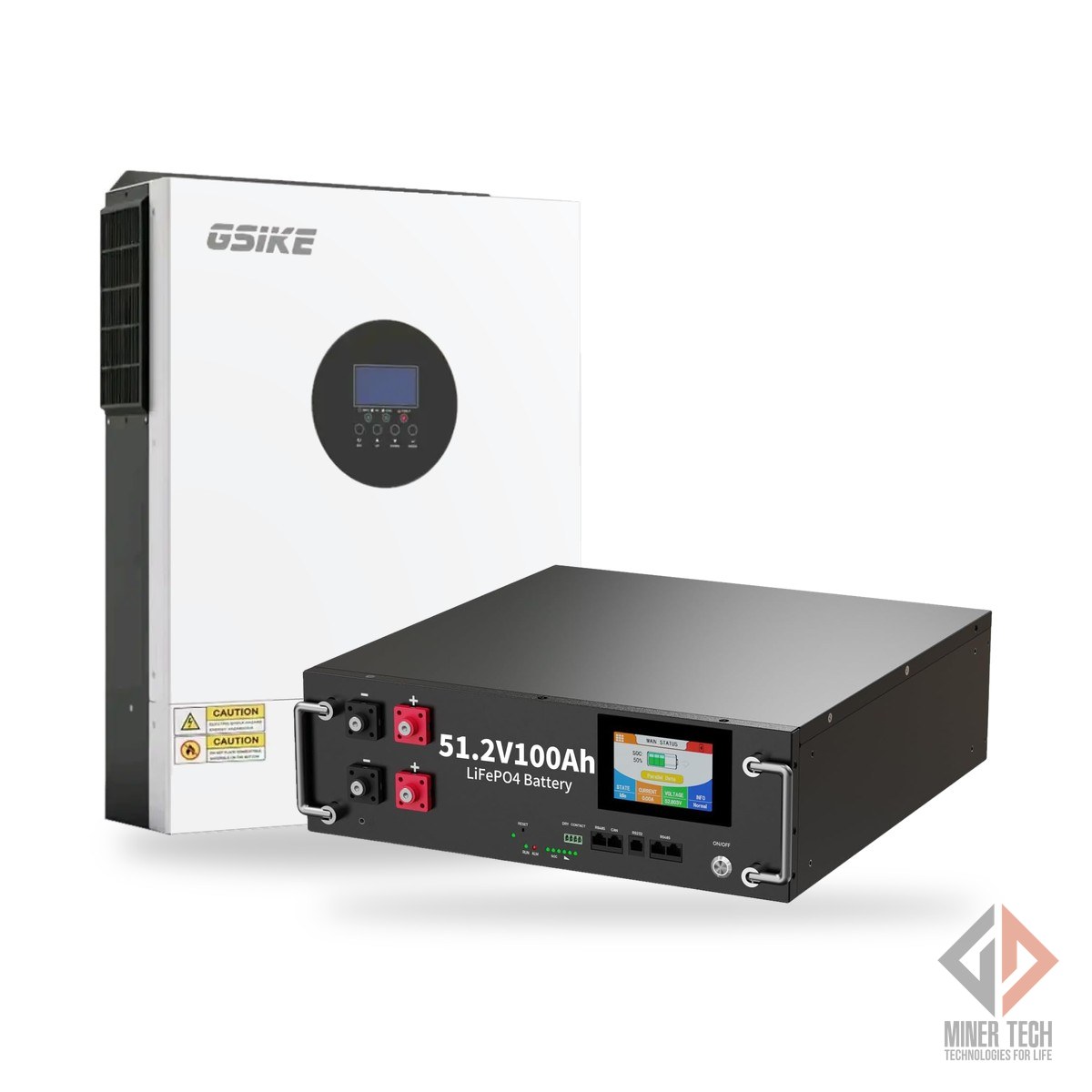
A ready-made 11 kW backup power kit: the hybrid inverter GSIKE 11 kW 48 V WiFi and the lithium battery 51.2 V 100 Ah 5.12 kWh rack-mount with display. The inverter and battery are connected with a communication cable (RS485, CAN), so the inverter sees the battery’s charge level — the protocol and menu items are in the PDF “Kit connection and setup”. When the power goes out, the house switches to the battery within 10 ms, and when there is grid or solar power, the battery charges.
Who this kit is for
- For a private house with high consumption: boiler, water heater, pumps, kitchen appliances, washing machine.
- For those planning to expand the battery bank: start with one battery and add more in parallel.
- For a solar power station: during the day the panels power the house and charge the battery.
How long it runs without grid power
Usable energy reserve — about 4.1 kWh. Approximately:
| 300 W (fridge, router, lights) | ≈ 14 h |
| 500 W (+ TV, laptops, boiler) | ≈ 8.3 h |
| 1,000 W | ≈ 4.1 h |
| 2,000 W | ≈ 2.1 h |
Kit advantages
- Selected by engineers — the inverter and battery have been tested together; all settings are in the PDF “Kit connection and setup”.
- 11 kW of power and 22 kVA peak — pure sine wave 230 V for a boiler, pumps and sensitive equipment.
- The honest truth about the battery — the battery’s BMS is rated at 100 A, which is about 5.1 kW of continuous load from the battery. The inverter delivers its full 11 kW when there is grid or solar power.
- Safe LiFePO4 chemistry — a maintenance-free battery for everyday use.
- Solar-ready — built-in MPPT controller 60–500 V, panels 2 × 5500 W.
- WiFi monitoring — the system status is visible in the phone app.
- Turnkey installation in Dnipro and the region: we will install, configure and show you how to use it.
Main specifications
| Inverter power | 11,000 W, peak 22 kVA |
| Battery energy | 5.12 kWh (51.2 V, 100 Ah) |
| Continuous output from the battery | up to ≈ 5.1 kW (BMS 100 A) |
| Solar panel input | 60–500 V, Voc up to 500 V; panels 2 × 5500 W |
| Transfer time | 10 ms |
| Inverter ↔ battery communication | RS485 (BMS) |
| Monitoring | WiFi (inverter) |
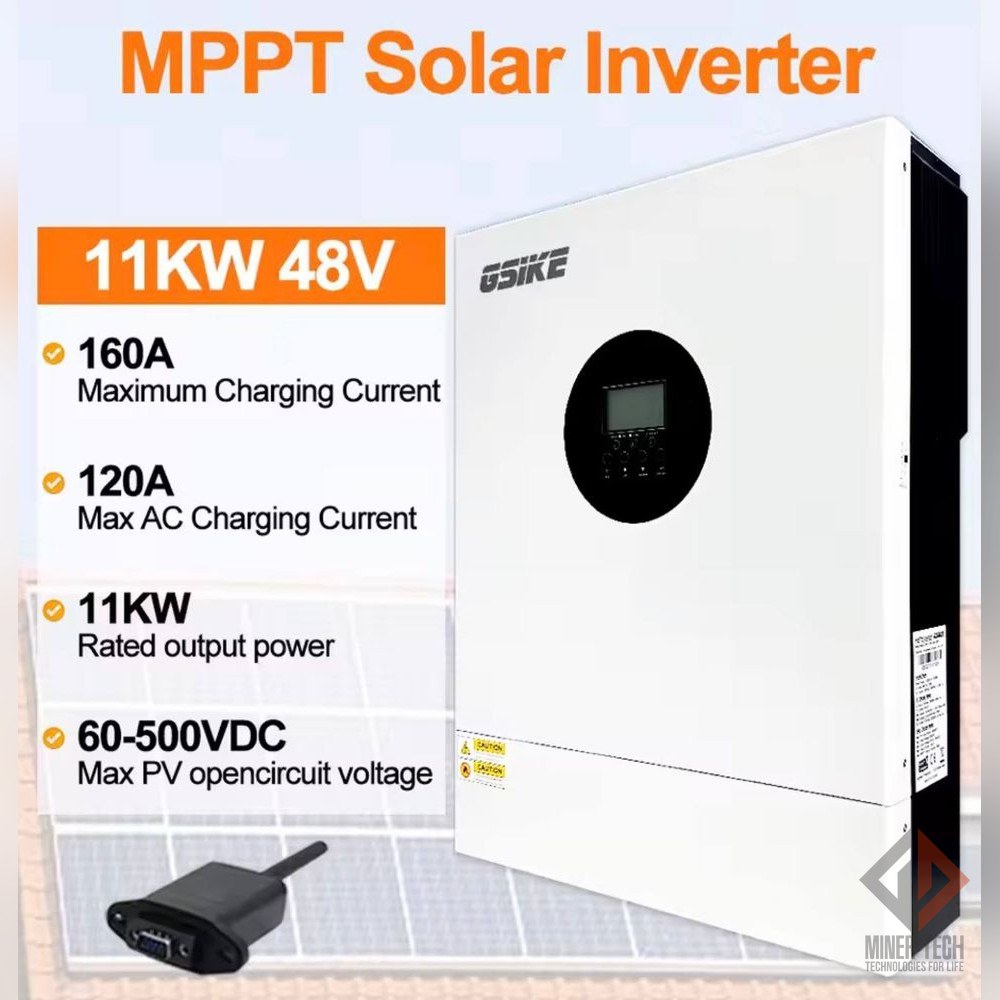
| Max. charging current from the 220 V grid | 120 A |
| Max. solar charging current | 160 A |
| Max. total charging current (solar + grid) | 160 A |
| Grid voltage range | 90–280 V (“appliances” mode), 170–280 V (UPS and generator modes); max. 300 V |
| Max. bypass current (from the grid) | not specified separately: via bypass — up to the rated 11,000 W; on overload the protection trips and the output switches off |
| MPPT operating range | 60–500 V |
| Battery operating voltage range | 40–58.4 V |
| Inverter dimensions | 540 × 403 × 122 mm |
| Inverter weight | 14.8 kg |
| Battery dimensions | 460 × 442 × 140 mm |
| Battery weight | 43 kg |
| Total kit weight | 57.8 kg |
The kit includes
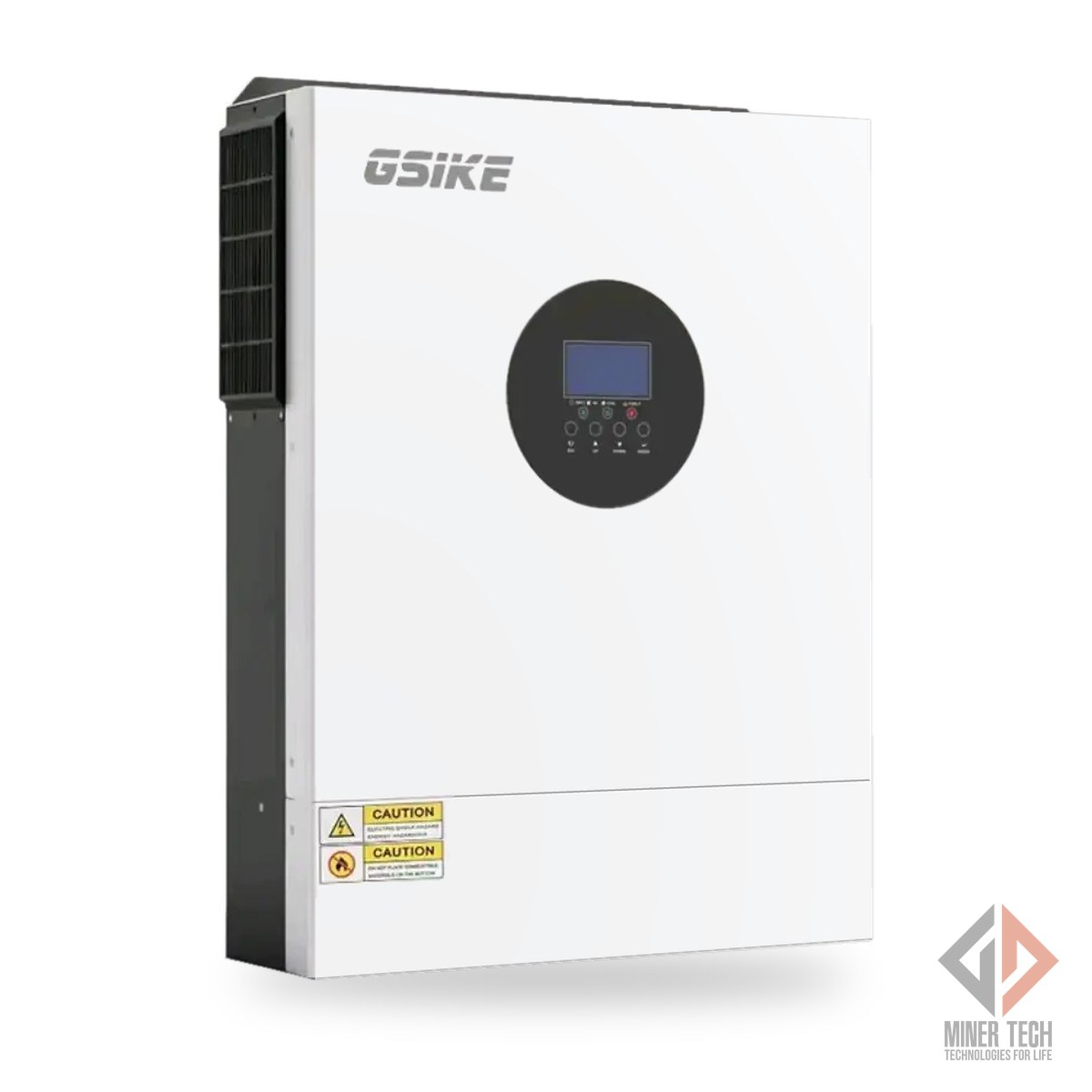
- Inverter GSIKE 11kW 48V WiFi
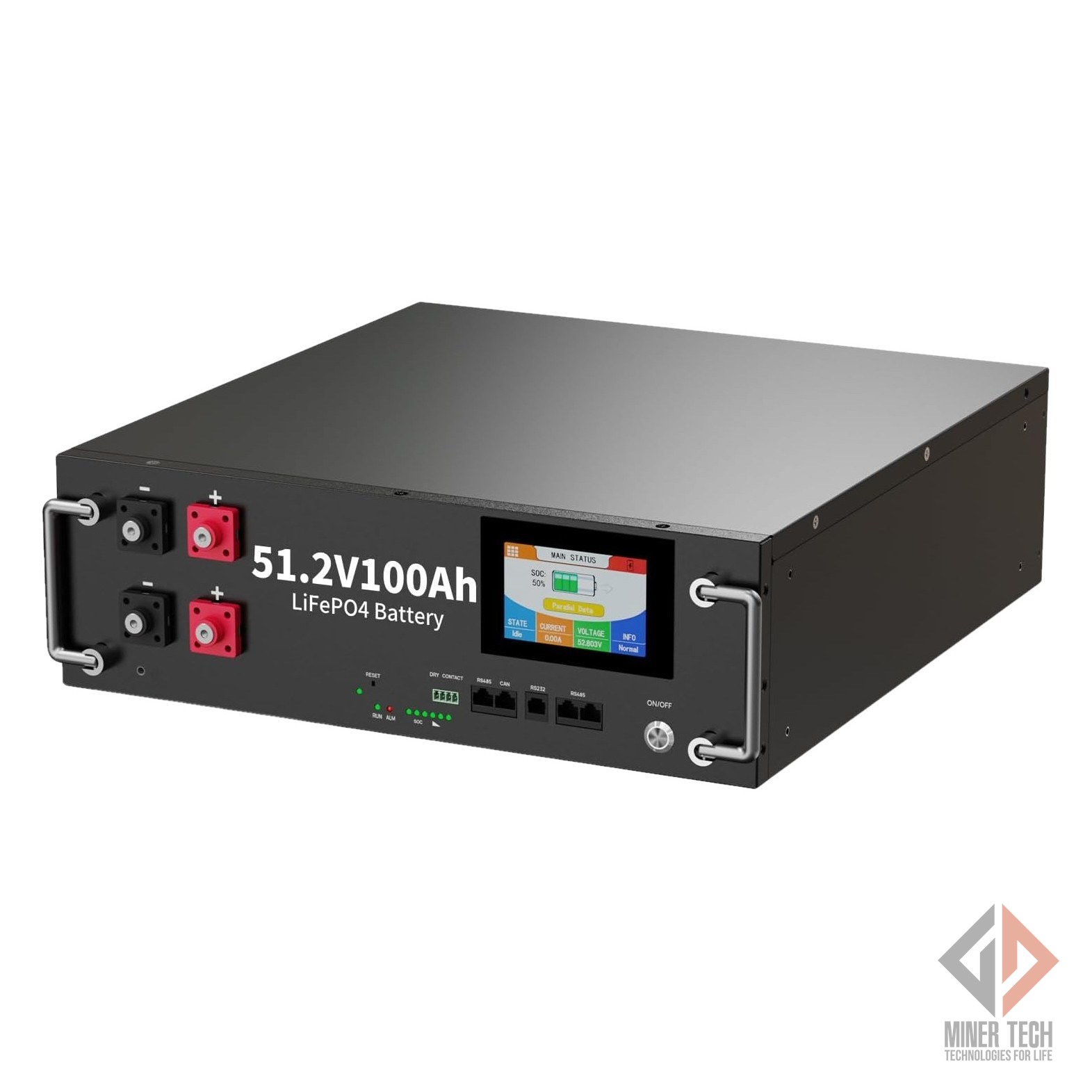
- Battery 51.2 V 100 Ah 5.12 kWh rack-mount with display
Recommended: power cable sets for the inverter
All of the system’s current flows through the cables between the battery and the inverter — under load that means tens or even hundreds of amps. That is why we recommend taking our M8–M8 power cable set (“+” and “−”) made of 35 mm² copper cable right away. For an inverter of this power, the battery current reaches 200–250 A, so reinforced 35 mm² cables are needed here. We crimp the lugs ourselves on a professional press with a hexagonal die, not with pliers or a hammer. The copper strands and the sleeve are compressed into a single whole, so the contact has minimal resistance, does not heat up and does not loosen over the years. The cables are ready to install: bolt them to the terminals and you can switch on.
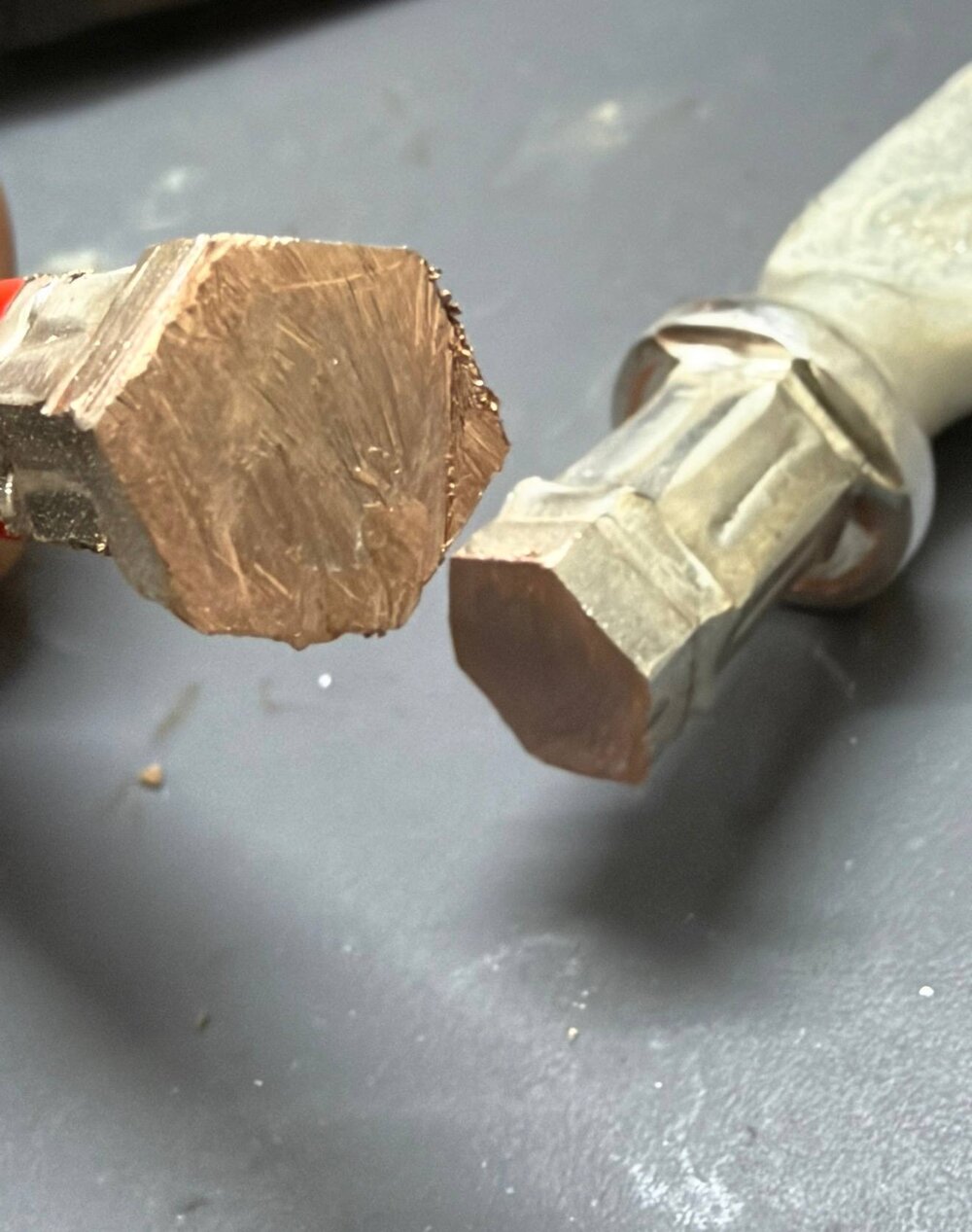
Cross-section of our lug: solid copper with no voids.
Choose the length:
- Power cable set 1.3 m M8–M8 35 mm² — battery placed right next to the inverter.
- Power cable set 1.5 m M8–M8 35 mm² — battery on the floor under a wall-mounted inverter.
- Power cable set 2 m M8–M8 35 mm² — battery placed a little further away, for example in a neighbouring cabinet or niche.
The shorter the cable, the lower the losses, so choose the shortest one that still lets you place the equipment comfortably. You can see how we crimp the lugs in the video on the cable page. Not sure about the length? We will advise you by phone.
Similar kits
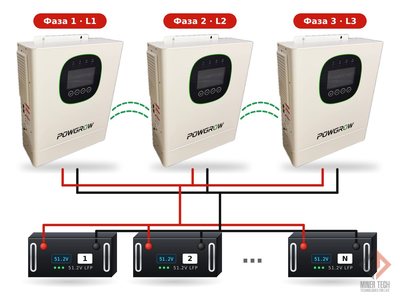
- 3-phase kit 33 kW (3 × GSIKE 11 kW)
- Kit EASUN SMS-6.5KP 6.5 kW 48 V WiFi + rack battery 51.2 V 100 Ah 5.12 kWh with display
- 3-phase kit 33 kW (3 × GSIKE 11 kW) + 2 × MFUZOP 51.2 V 314 Ah 16.07 kWh
- Kit EASUN SMT-6.2KW 6.2 kW 48 V + rack battery 51.2 V 100 Ah 5.12 kWh with display
Useful reading
- How long a battery + inverter kit will last
- Which kit to choose for an apartment
- 12, 24 or 48 volts: which system voltage to choose
See also: all battery + inverter kits.
We will select equipment for your specific task. Advice from a technical specialist: +38 099 054-40-38.
Stand for this power station
Don’t want to drill the walls because the apartment is rented or freshly renovated? Put the whole station on a metal floor stand: the inverter, switchgear and battery sit on one frame, the wall stays intact and the equipment is always accessible. For this equipment we recommend the MinerTech RK-3 rack for 3 modules + inverter; you can also choose the MinerTech RK-5 rack for 5 modules.